Blastomycosis in Dogs - Prevalent in Moose Jaw (Copy)
By Richard Dowson
This is General Information and NOT Veterinary Medicine advice. Always talk to your Vet!
I researched Blastomycosis ten-years-ago after a local friend told me his 12-year-old son had been infected with Blastomycosis while playing in the river valley.
It took 2 years to diagnose the condition, but once diagnosed he was treated and fully recovered.
Blastomycosis is Common in Moose Jaw
Blastomycosis in Moose Jaw is often overlooked, but as part of my research I learned from a post-doctoral student at the Western College of Veterinarian Medicine in Saskatoon that Blastomycosis is very common in Moose Jaw.
From a September 2014 Facebook post from the Bellamy Harrison Animal Hospital in Moose Jaw, Saskatchewan they write: “Moose Jaw is one of the Canadian hotspots for blastomycosis, we see multiple cases every year.”
What is it?
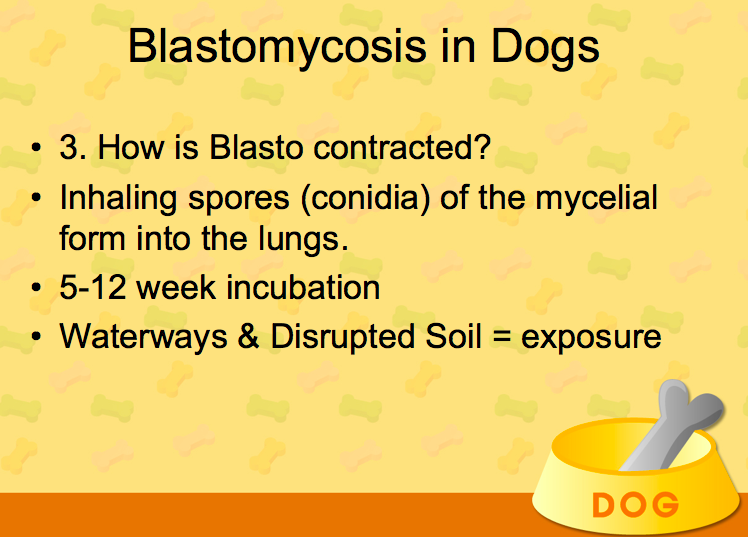
Blastomycosis infection is caused when spores of the fungus Blastomyces, that live in moist soil and leaves, are inhaled. Blastomycosis is most common in dogs but can infect humans if the spore is disturbed and inhaled.
What is Blastomycosis?
According to Co-Pilot: “… dogs can get blastomycosis, a systemic fungal infection caused by the fungus Blastomyces dermatitidis, and they are more susceptible to it than many other animals.”
Continued From Co-Pilot
“The spores travel to the lungs, where body heat transforms them to yeast. The infection may go unnoticed for weeks or months before causing any problems. In some cases, the dog’s immune system will kill the infection, and the dog is fine. But in other dogs, it can spread throughout the body.”
Symptoms include hash cough, lethargy, fever, inflammation of eyes and weight loss.
It is treated with anti-fungal medication
The American Kennel Club notes: “Residence near a river or lake and access to recently excavated sites have been demonstrated to increase the risk of infection,”
Co-Pilot Concludes: “… if you suspect your dog may have been exposed to environments where blastomycosis is prevalent or if they show symptoms, it is crucial to consult a veterinarian for proper diagnosis and treatment.”