Parkbeg Bombed by the Japanese
By Richard Dowson – Revised, May 7, 2026
From the Canadian Press at Ottawa, May 22, 1945
“Defence headquarter announced today that unmanned Japanese balloons have dropped explosives in isolated locations on the western part of the North American Continent and unexploded bombs may still be lying in isolated spots.
“For security and censorship reasons the government had not told the public before.
“The campaign of ‘paper balloon bombs’ began in November 1944 when thousands of Balloon Bombs were launched from Japan and designed to explode in Alaska, Canada and U.S.A. in the hope of setting the forests afire. The campaign continued until April 1945
“The Canadian Government never told anyone until May 22, 1945. The reason: “In any case of casualty, it will serve the national interest if the press and radio and all civilians will refrain from connecting such casualties to the enemy”
Canada was still at war with the Japanese in May 1945.
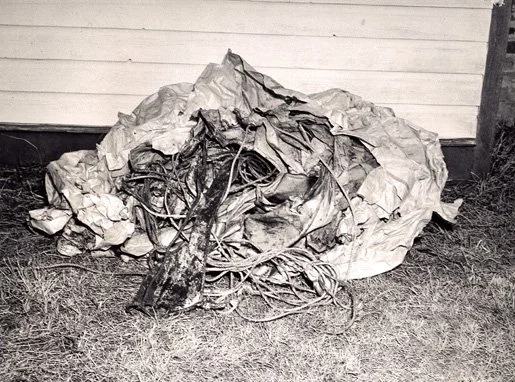
Library and Achieves Canada Photo PA203216 Recovered at Delburne, Alberta, near Red Deer. It actually crashed near Pine Lake on land owned by Earl Beck of Red Deer.
The Balloon Bombers were dangerous. Six picnickers in Oregon were killed by one on May 5, 1945. It was after this that the Government decided to lift the blackout on information.
The Moose Jaw Time Herald news article continued, “Some may be buried beneath melting snow.” With the coming of warm weather and the end of the school season It is desirable that people and especially children living west of the Great Lakes be warned of this possible hazard.”
They were described as “… grey, white or greenish blue paper about 33 feet in diameter…” They usually carried four 4.5-kilogram incendiaries and a 15-kilogram high explosive bomb.
On January 1, 1945 fragments of the first balloon to crash in Canada were found near Stony Rapids, Saskatchewan. Forty fell in Canada in March 1945 making it the busiest month.
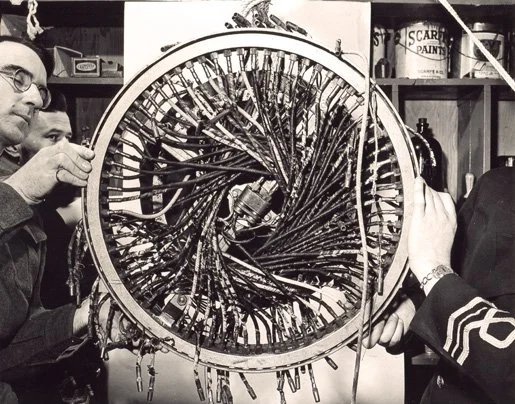
Found Jan. 21, 1945 near Ft. Simpson, NWT Library and Archives Canada Photo PA 203213
One crashed at Minton, south of Pangman, Saskatchewan on January 12, 1945. There was fear the children at Minton couldhave accidentally found the device leading to an explosion.
Parkbeg, Saskatchewan, the home of Gainer the Gopher was ‘bombed’ February 8, 1945 when a Balloon Bomber crashed there. No one was injured.
The Moose Jaw Times Herald reported on May 22, 1945, “One prairie farmer said that he had seen a balloon come sailing over his home, travelling low under an overcast sky. He thought it was a parachute and hurried to his truck and followed it. Believing a man force to abandon his plane in the air probably would need help. A Neighbour finally told him that the balloon had come down on his farm and had no passenger.”
They also reported, “Rural gossip has spread news of the balloons far and wide and one story said that a farmer’s main reaction to a balloon landing in his field wat that it probably would hinder him to getting along with his work in the spring.”
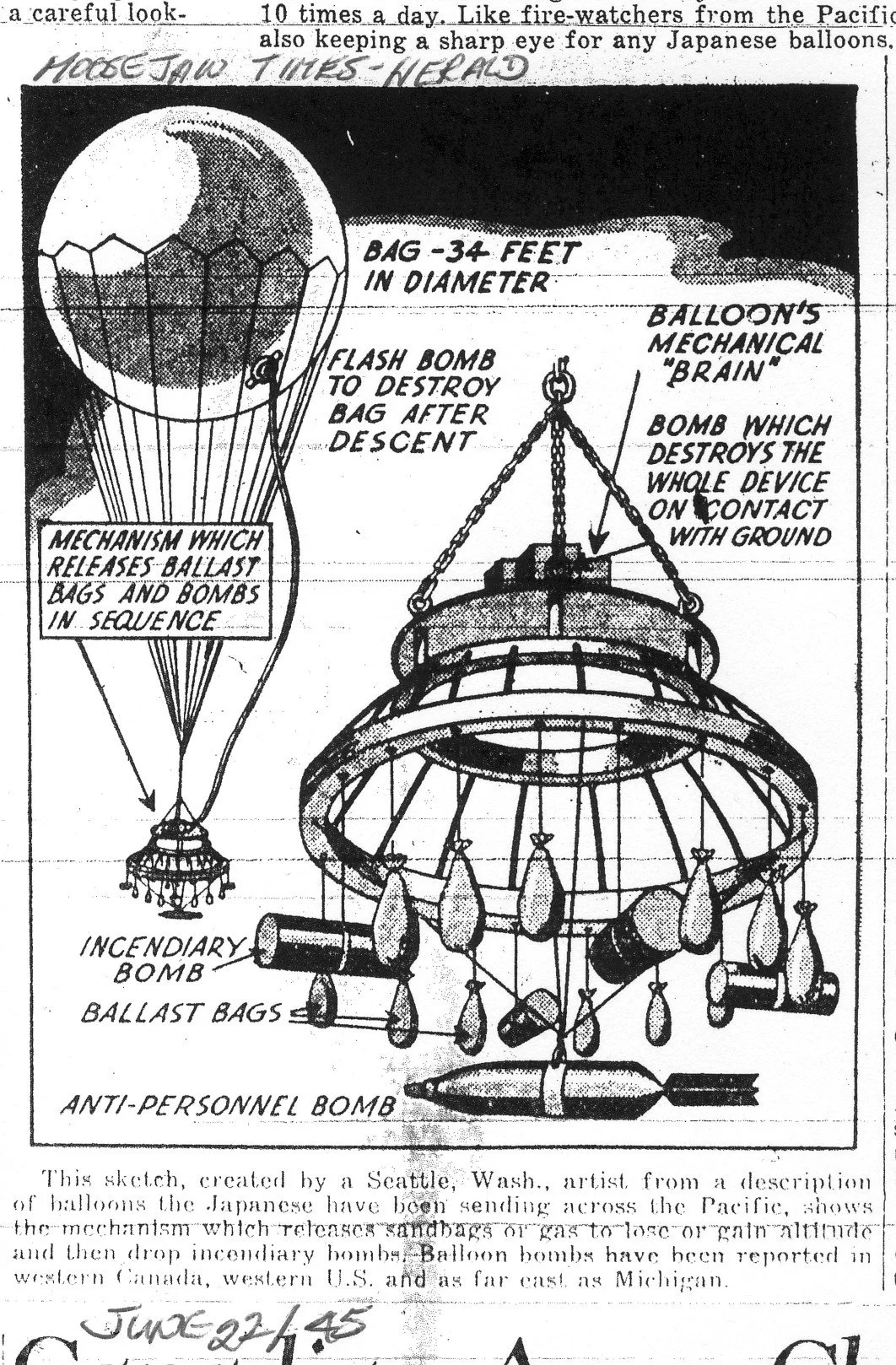
Canadian Press and Moose Jaw Times Herald, June 22, 1945
The Balloon Bombs were hard to detect on radar. They flew at 30,000 feet. Efforts were made to shoot them down but only a few fell to the guns of Canadian fighter pilots. Some were shot down in the Aleutian Islands by Americans and Canadian.
Hawker Hurricane fighters were in storage in Moose Jaw and thought was given to deploy them around the West to strike at the paper balloons but nothing really came of that.
A Canadian fighter pilot shot one down over Sumas, B.C. on February 21, 1945. Another fell to Canadian gunfire over Ganges Harbour, Salt Spring Island, B.C. In spite of the mighty effort the Fu-go Balloon Bombs few were shot down and little damage was done by the Balloons.
Writer Richard Dowson is a retired educator.
He is known for his frequenting local coffee shops and other places seniors gather.
In a previous life he wrote comedy for CHED in Edmonton.