Railroad Diamonds - The Section Gangs’ Best Friends
By Richard Dowson
Chris Dunbar joined us for our usual Saturday breakfast at Carol’s last week.
Chris is a long-time resident of Moose Jaw. He is retired from the railroad and is a railroad historian.
Chris belongs to many Railroad Historical Societies across North American and is the most informed railroad guy I have ever met.
We talked about the old ‘Section Gangs’ that were a fixture in communities along the railroad.
They were a ‘gang’ of worker who maintained a section of the railroad and lived in the community. The foreman was often provided with a house.
With modernization the Section Gangs were done away with and replaced with mobile work crews who use modern equipment to maintain large sections of railroads.
In the old days the Section Gang could be seen traveling in ‘Speeders’ like this.
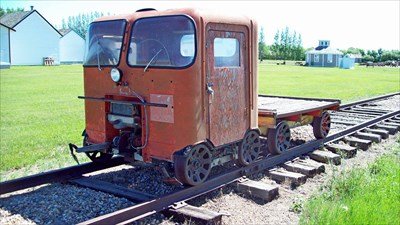
Photo Credit: Railroad Speeder, Western Development Museum. North Battleford
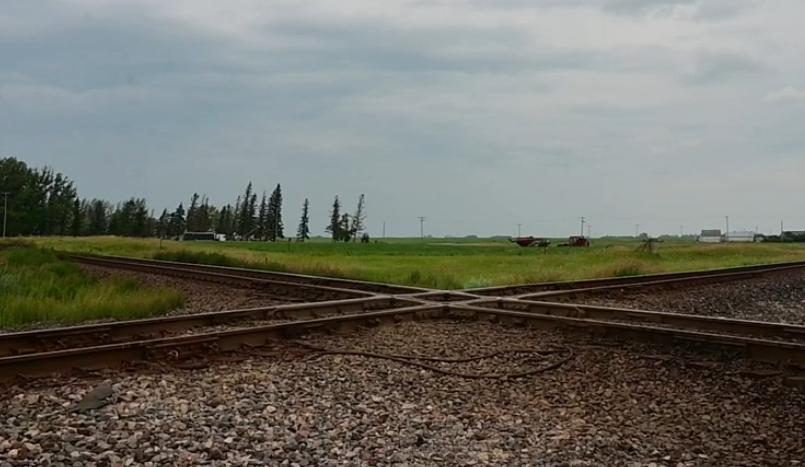
Nokomis, Saskatchewan Diamond
According to Chris, not all the Gangs are gone. A small crew is kept at Nokomis to maintain the CN-CPKC Diamond.
That caught my attention. I researched ‘Diamond Crossings’.
What is a Diamond Crossing?
A Diamond Crossing, also called a Diamond Junction is where two train tracks cross each other on a level grade.
That way one railway doesn’t have to make an overpass over the tracks of another railroad.
For example, a Diamond is used so a CPKC train can cross a CNR rail line and vise-versa. Diamonds can be at right angles or any other angle. The one at Nokomis is at right angles.
The Diamond is a cheap way of dealing with railway intersections but, according to Chris, the Diamond requires a great deal of maintenance, hence a crew stationed at Nokomis.
Extra maintenance is required because each track has a gap for wheels to cross. There are four gaps.
The Diamond ‘track’ has extra support tracks and a base supportcalled a Frog that allows the wheel to roll through, or hop, the gap.
According to an article by Adam Burns, a Frog is a, “Special track segments that permit wheel flanges to pass through gaps without obstruction.” (The Railroad Diamond: Intersection of Steel and Precision)
Burns also writes, the Diamond is subject to “… constant wear and tear. Every time a train passes over the crossing, the frog sections, guard rails, and adjacent tracks endure immense stress and force. This continuous mechanical load leads to material fatigue, wear, and eventual deformation.”
Chris explained the process. A train wanting to cross the Diamond comes to a stop at the automated signal and waits. It usually takes 3 minutes. If there is no train approaching from the other direction(s) the signal changes and the train proceeds.
This is the Diamond at Nokomis, Saskatchewan.
The following photo of a Diamond showing the Frog and extra rails.
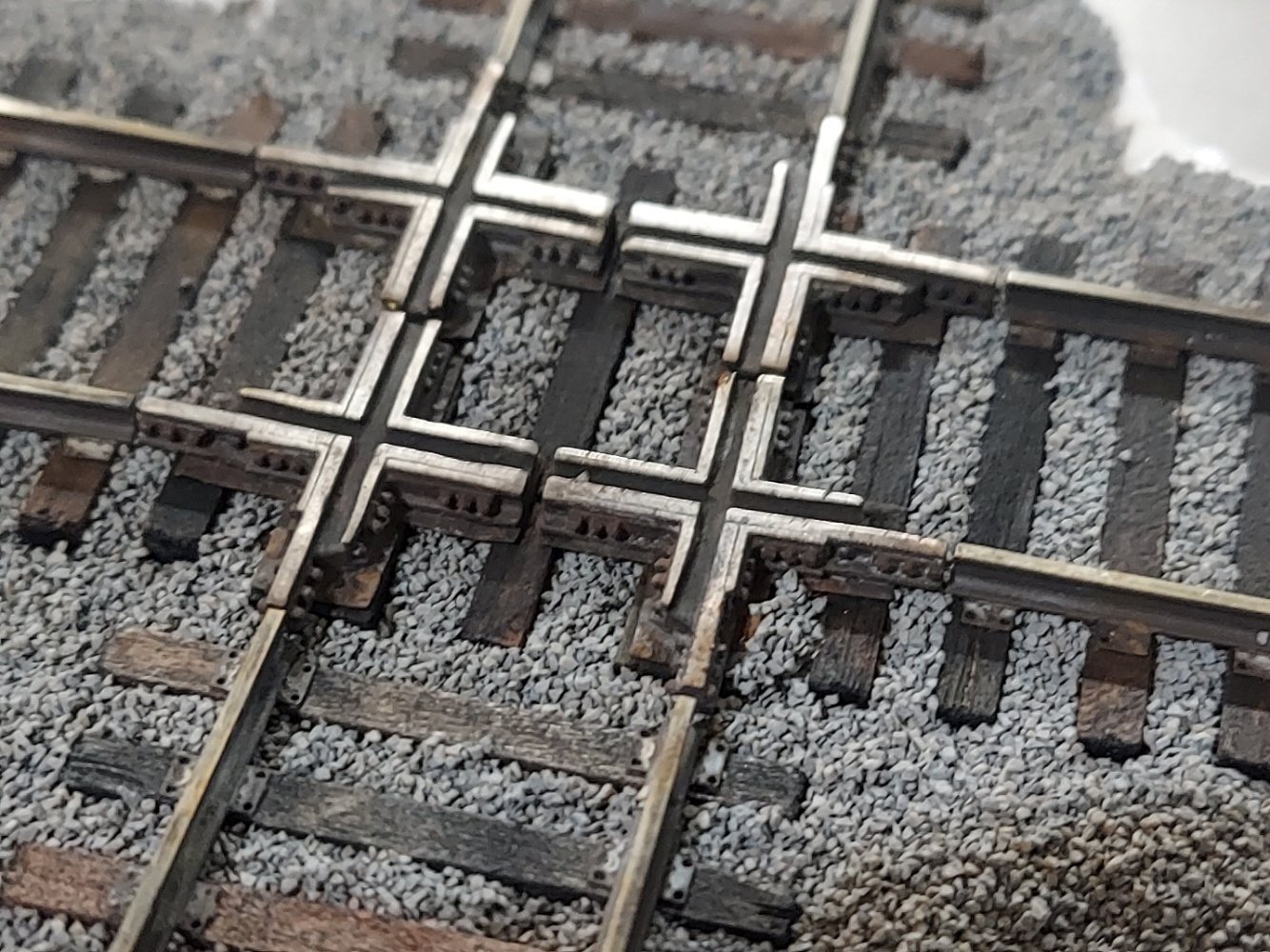
Source: ohrtracksupply
This image shows the Frog and extra support rails added.
Additional Reference: See “CN Trains Allan to Jasin with Nokomis Diamond”
LinkCN Trains - Allan To Jasmin, SK With Nokomis Diamond
Credit: Train Videos by Chris