
Moose Jaw and District Sports Hall of Fame - Class of 2026
This year’s inductees….
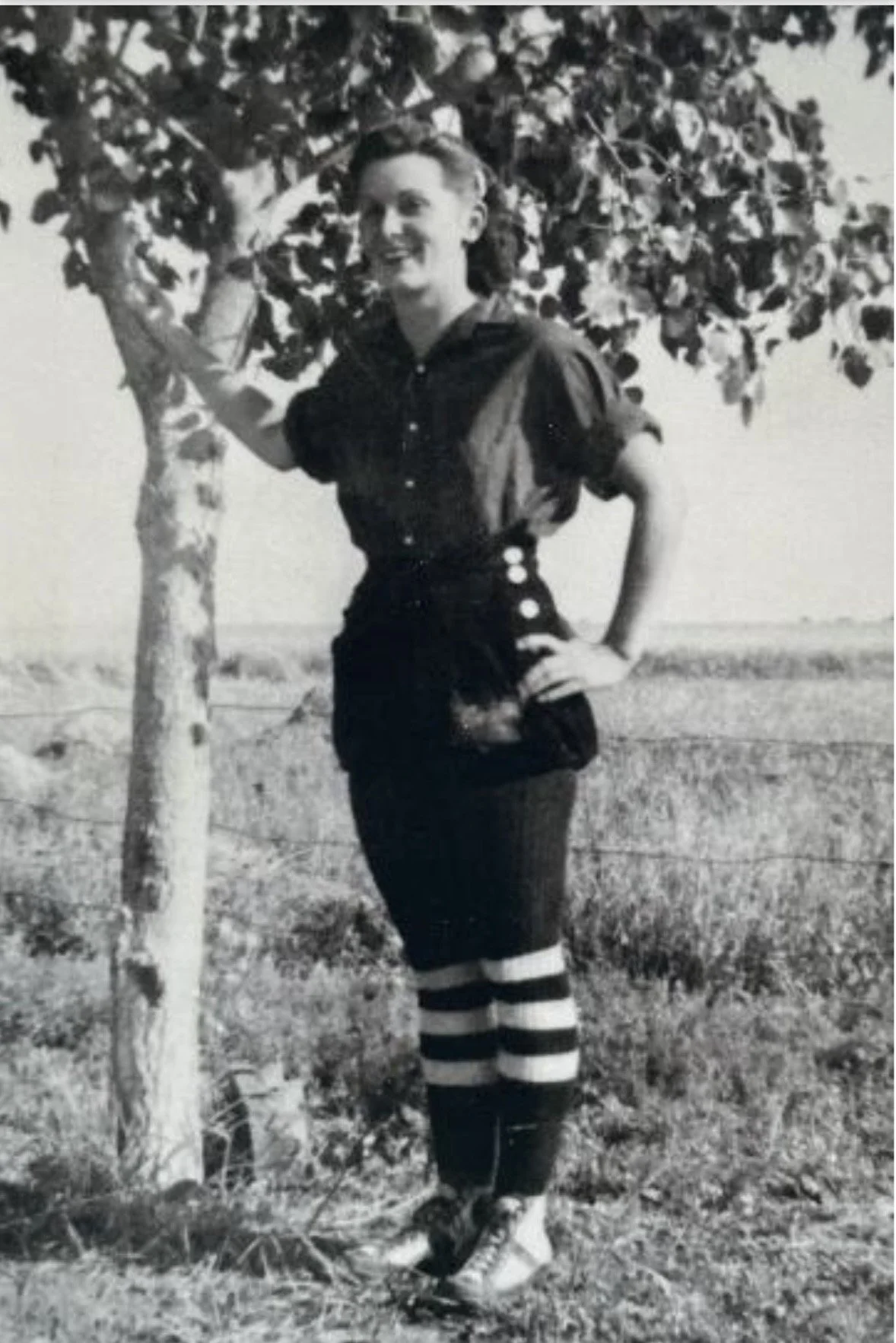
Mildred (Millie) Binner
Athlete: Fastball, Curling
Mildred (Millie) Binner was a multi-sport athlete competing in fastball and curling from the 1940’s to the 1970’s.
She was an integral part of the Moose Jaw Royals fastball team as a pitcher recording several no-hit games in her career. In 1945 she pitched 18 consecutive scoreless innings in league play. The Royals captured eight consecutive provincial fastball titles from 1942 to 1949. The team travelled through the United States playing exhibition games in Chicago and Cleveland in the 1940’s. In 1943 the Royals won the Western Canadian Fastball Championship and travelled to Detroit to participate in the World Series of Fastball.
With her fastball playing days behind her, Millie turned to the sport of curling to satisfy her competitive desires.
Millie soon excelled at the sport and played lead on the 1956 Saskatchewan Provincial Champion team led by Hazel Grigg (skip), Dot Crippen (3rd), and Elsie Patterson (2nd). They competed in the Eaton Western Canadian Championships held in Vancouver, B.C. Over the next several years Millie skipped teams to six Southern Saskatchewan titles and two Provincial Championships. Her team of sister Val Starrak (3rd), Peg Johnson (2nd) and Jean Balderston (lead) represented Saskatchewan at Saint John, NB in 1963. Later she took her ladies masters team to the Canadian Championships at Peace River, Alta. In 1977.
Millie was inducted into the Saskatchewan Legends of Curling Hall of Fame in 2006.
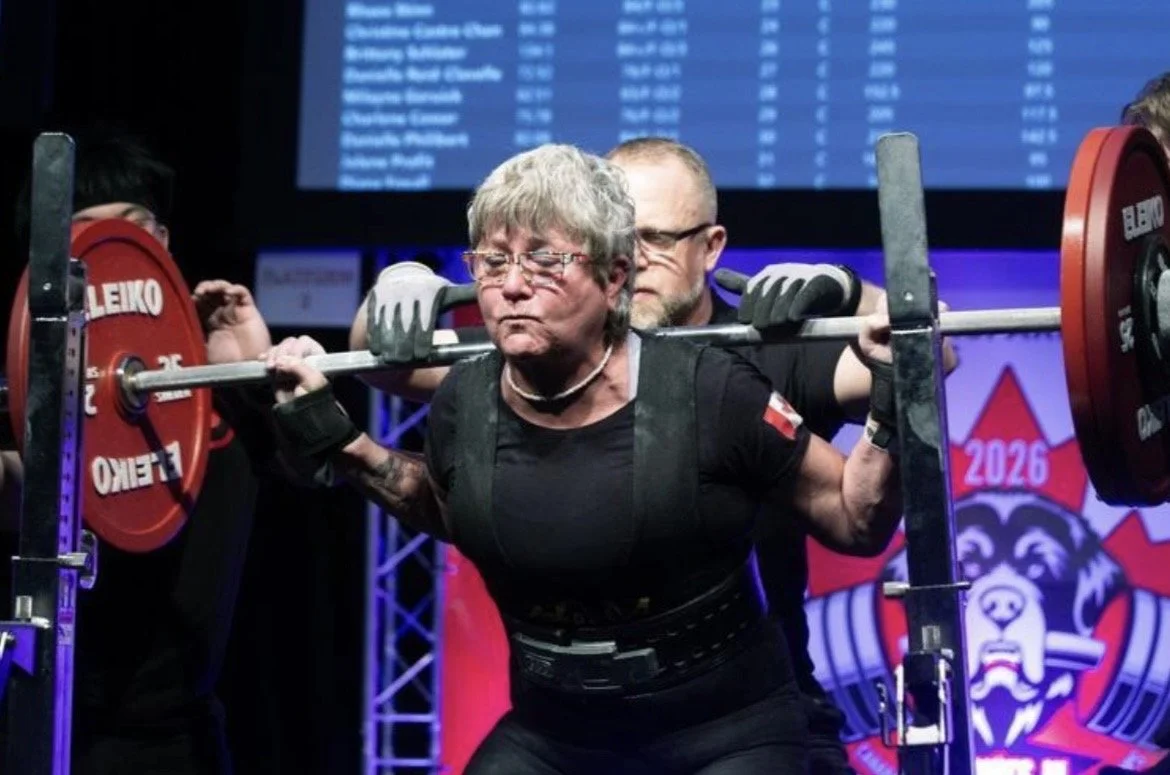
Mava Brydges
Athlete: Powerlifting
Mava Brydges moved to Moose Jaw in 1980 and began strength training at the local Pyle’s Gym.
In 1983 she competed for the first time at the Western Canadian Championships winning the gold medal with a total lift of 275 kg. She also broke the national deadlift record with a lift of 136 kg as well. Mava was awarded the “Best Female Lifter” of the meet award.She took some time away from powerlifting to raise her family but always yearned to compete in the sport again.
Mava returned to CrossFit training in 2013 at the age of 55 and began powerlifting with Rhea and Ryan Stinn in 2017. Ryan provided her with coaching and a training program.
She quickly found success in powerlifting at the provincial, national and world championships.
Over the next ten years Mava competed in 27 Masters 3category (age 60-69) competitions in both Classic and Equiped events capturing 24 gold medals and 3 silvers.
She currently holds 27 provincial records and 10 national records.
Mava attended the Pan-American Championships in Orlando, Florida in 2021 where she won the gold and was awarded the “Women’s Master’s Equipped Best Lifter” trophy. Mava has competed at the International Powerlifting Federation (IPF) World Championships in 2018 (silver), 2022 (gold) and 2024 (silver).
At the Canadian National Powerlifting Championships held in St. Johns NFLD in March of 2026 Mava achieved her lifetime best total of 372 kg at 68 years old.
Mava looks forward to competing in more national and international events.
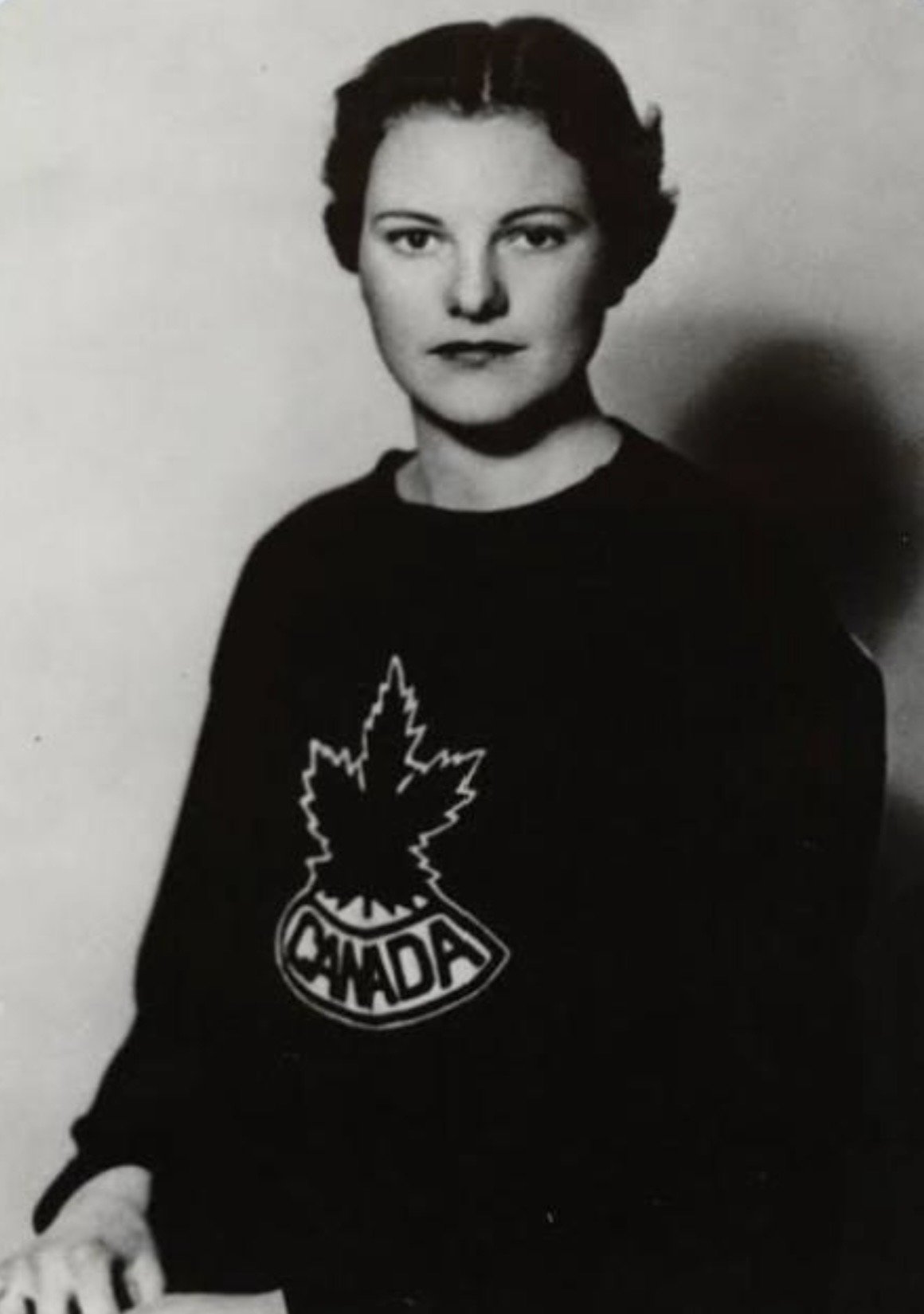
Phyllis Dewar
Athlete: Swimming
Phyllis Dewar was born in Moose Jaw in 1916 and learned to swim at the age of four. As a young teenager, Phyllis developed a good combination of speed and endurance through many days spent in the Crescent Park pool.
She dominated Saskatchewan women’s swimming from 1931-33 setting numerous provincial records and winning the one-mile race three times.
Phyllis was motivated to qualify for the 1934 British Empire Games in London, England. She and her sister Dora trained 4 to 6 hours a day at the Moose Jaw Aquatic Club. Phyllis would lie on a board and propel herself half a mile with nothing but leg kicks. This technique was copied by top Australian swimmers in the 1950’s.
Phyllis not only made the team but became the star of the Games by setting new records in the 100 and 440 yard races.
She won 4 gold medals (100 and 440 yard freestyle; 330 and 440 yard medley relays). Phyllis returned to Canada and won the prestigious Barker Trophy one-mile race in Toronto. Phyllis was awarded the Bobbie Rosenfeld Trophy and the Velma Springstead Trophy as the 1934 Canadian Female Athlete of the Year.
She acquired the nickname of “the Moose Jaw Mermaid “ for her accomplishments.
Entirely self trained at this point, Phyllis moved to Vancouver to receive coaching and swim year round. The effort paid off at the 1935 Canadian Championships in Winnipeg. She broke her British Empire records in the 100 (1:03.2); 440 (5:32.4); then swam the mile in world record time (2:23.32) setting Canadian records for the 1000 (13:38) and 1500 (20:40) along the way.
Phyllis was touted as a medal prospect for the 1936 Olympic Games, but she came down with the flu in Berlin and was unable to reach the finals. She continued to compete until the 1938 British Empire Games held in Sydney, Australia.
Her triumph was anchoring the Canadian 440 yard freestyle relay team to a gold medal and her fifth career international gold medal.
Phyllis retired and enlisted in the Canadian Navy in World War II. While stationed in Halifax she met and married Lieutenant Murray Lowery in 1943. They had four children.
The olympic sized outdoor pool in Crescent Park is named in her honour. She has been inducted into the Sask. Sport (1967); Canadian Sports (1971) and Canadian Olympic (1972) Halls of Fame.
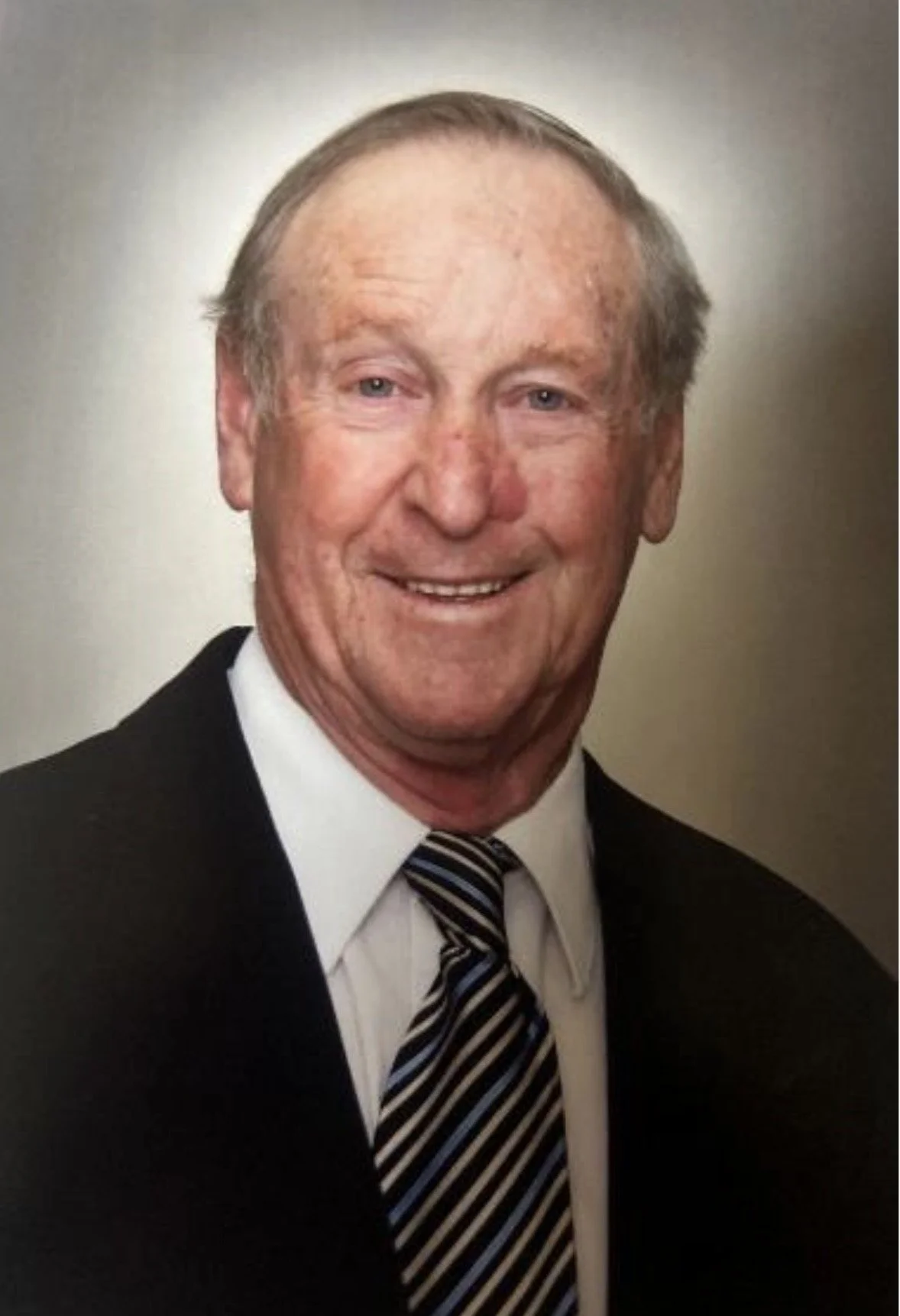
Bert Hunt
Builder: Hockey, Learn to Skate Program
Samuel (Bert) Hunt was born in Moose Jaw.
As a youth he was interested in playing hockey. Bert tried out for the Moose Jaw Midget team but failed to make the cut. He decided to become involved in Church League minor hockey coaching 7-8 year olds. Later he was invited to participate in the Moose Jaw Hockey school as an instructor. In 1970 Bert took over the head instructor position. He often spent time watching local hockey teams practice and modified their drills to accommodate the youngsters he was teaching.
Bert attended the Howie Meeker Hockey School in 1976 to build on his knowledge and skills in teaching. Bert taught almost 3000 children to skate and learn hockey skills in his 35 years of the “Learn to Skate “program.
Every year between 80 -100 students enrolled in the program.
Bert’s motto was “ We are here to learn and to have fun.” He held practices twice a week from September to March on Saturdays at the Civic Center and Tuesdays or Thursdays at the Plamor Palace.
He impressed his young hockey players by taking them to a Saturday night Warrior game, touring the dressing room, meeting the Warrior players and playing short games on the ice between periods. Bert also convinced Warrior players to help out at his practices.
For his many years of service to the youth of Moose Jaw, the Plamor Palace rink was renamed the “Bert Hunt Arena” in 1989. Bert has also received the following honours: Moose Jaw Minor Hockey Assoc. Dedication Award (1986); Times-Herald Sports Builder (2001); Ron Ogle “Volunteer of the Year” (1998); and Queen Elizabeth II Jubilee Medal (2022).
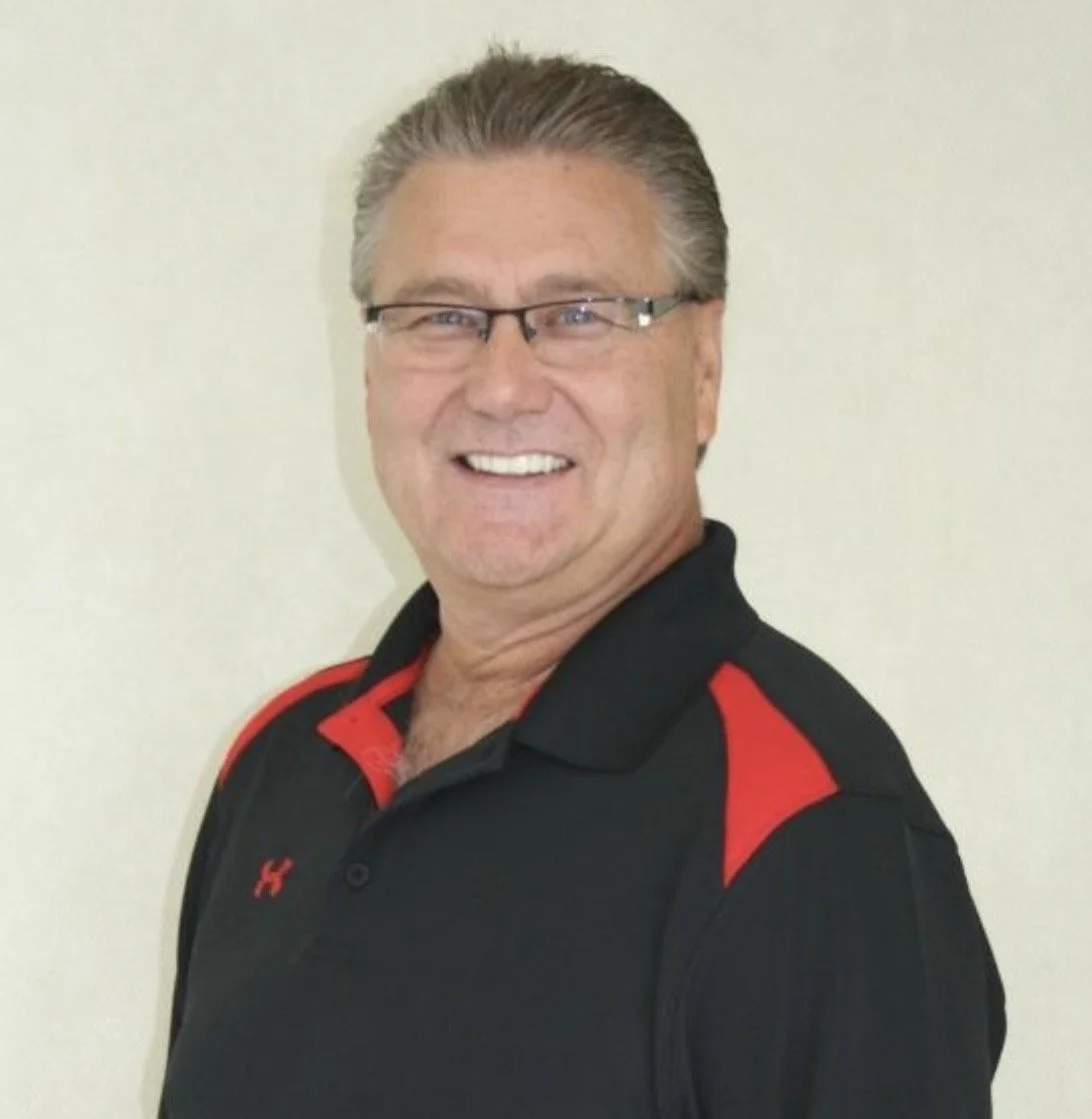
Kevin Muench
Builder: Hockey Officiating
Kevin Muench became involved locally in hockey officiating in the mid 1980’s.
He has dedicated over 40 years to the sport as a Level VI rated referee, an executive, officiating coach and supervisor with provincial, national and international associations.
He was considered one of the best on-ice officials in Canada receiving numerous high profile assignments at national and international tournaments. Kevin worked in the NHL minor league system from 1987 to 1992. He officiated at the Memorial Cup, Royal Bank Cup, World Junior Championships,World Men’s Championships and the Winter Olympics in Lillehammer, Norway.
Kevin’s largest contributions have come off the ice. For several years he was an integral part of the executive of the MJHOA working in different roles. Kevin took on the task of modernizing the MJHOA policy, procedures, recruitment of officials, collecting fees and paying officials to improve relationships with all the Moose Jaw hockey leagues. Kevin later joined the Saskatchewan Hockey Association (SHA) as the head clinician and head supervisor where he implemented new programs and processes for developing officials.
Nationally, Kevin has been heavily involved with the Hockey Canada Officiating Committee which is responsible for the selection of referees for national and international assignments. He was instrumental in bringing about changes to procedures, instruction and supervision of officials across Canada. Kevin also developed a model for video coaching, on-line clinics, the Hockey Canada workbook and instructional videos.
As a supervisor Kevin has been a facilitator at regional, national and international seminars. He has participated at all competition levels including the World Juniors and Olympics. His leadership has led to refinements in the official’s coaching program.
For his long and exemplary service to hockey officiating Kevin has received the following accolades: Humboldt & District Sports Hall of Fame (2008), Hockey Canada Officiating Lifetime Achievement (2011), Saskatchewan Hockey Hall of Fame (2015) and the WHL Milestone Award (2026).
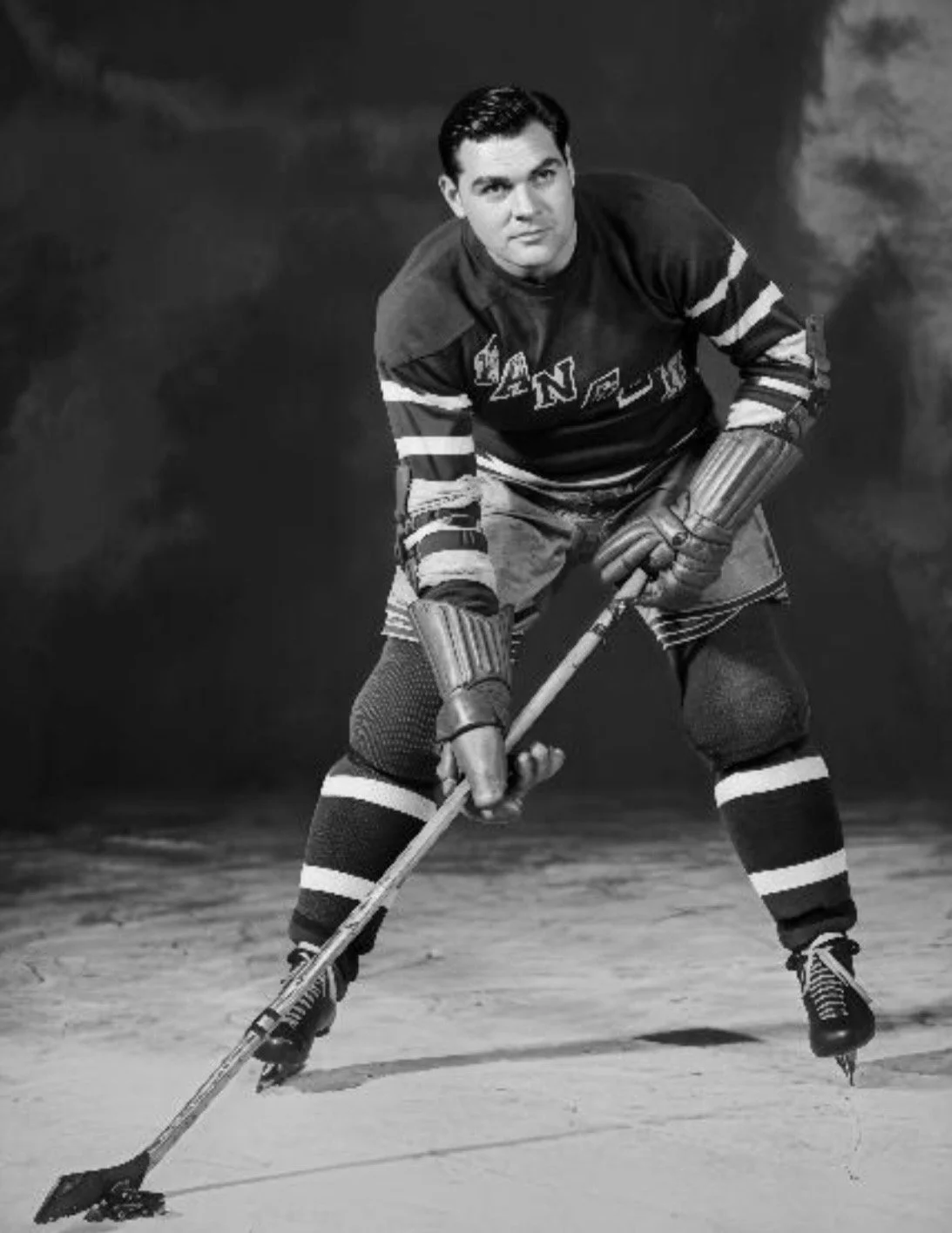
Vic Myles
Athlete: Hockey
Vic Myles had a love for hockey that began as a youth playing at King George School in Moose Jaw. He played minor hockey with the Moose Jaw Cubs and Crescents from 1931-34. A multi-talented athlete, he also was a member of the 1932 Moose Jaw Maroons Junior Football Club that won the Western Championship and played in the Dominion Finals.
As a twenty-year-old, Vic joined the highly competitive North Battleford Beavers team of the Northern Saskatchewan Senior Hockey League for three years. In the 1936-37 season he led the Beavers to the Allan Cup Finals losing to the Sudbury Tigers in a hard fought series. The team was enshrined in the North Battleford Hall of Fame in 2002. In 1937,
Vic returned to Moose Jaw and joined the Millers hockey team. The next year he had an outstanding season as the highest scoring defenseman and received the M.A. Currie Trophy as the Saskatchewan Senior Hockey League’s Most Valuable Player.
After attending a New York Rangers training camp in Winnipeg in 1939, Vic signed a professional contract with the Rangers. He spent seven years playing professionally with the Philadelphia Ramblers and New Haven
Eagles of the American Hockey League (1939-42), the NHL New York Rangers (1942-43), where he played 45 games scoring 6 goals and 9 assists with 57 penalty minutes. He also played for the Tulsa Oilers of the United
States Hockey League (1945-46) and the St Paul Saints (1946-47).
Vic moved back to Moose Jaw with his family in 1947 and spent four more seasons playing senior hockey with the Regina Capitals and Saskatoon Quakers.
After his playing days were done, Vic continued to be active in the sport for 20 years. Vic coached the Junior Canucks in 1951-52, the Millers in 1952-53 and the Senior Pla-Mors in 1962-63.
Vic remained heavily involved with hockey coaching, advising and fundraising for the rest of his life in Moose Jaw. For his long service Vic received a CHAB Community Recognition Plaque (1970) and the Moose Jaw Canuck Plaque (1982).
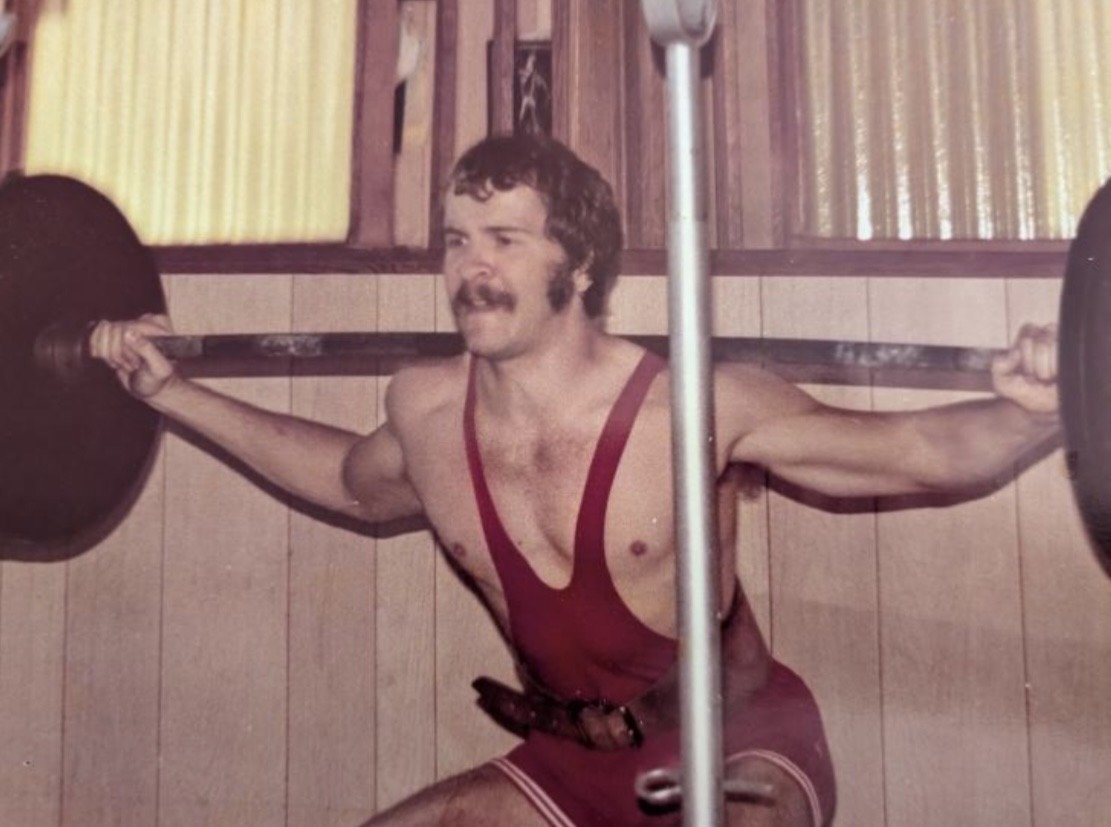
Bill Pyle
Builder: Powerlifting
Bill Pyle grew up in Moose Jaw under the guidance of his father who owned Pyles Gym where he learned the skills of powerlifting.
Bill had a successful career as an athlete placing third in the Saskatchewan Provincial Games (1978) and finished in the top three lifters at the Saskatchewan Championships (1978-81). Bill placed first at the Tri-State Open tournament in North Dakota in 1979 and competed at the Western Canadian Championships in 1983.
Bill’s coaching career began in 1978 and continues today in a consulting capacity. He was the coach of the Zone 3 weightlifting team which captured the bronze medal at the Saskatchewan Games held in Moose Jaw.
From 1978 to 1990 Bill was instrumental in the lifting careers of many athletes including Wayne Cormier who amassed 15 provincial and 11 national titles. He was the driving force to bring the first Saskatchewan Bodybuilding Championships to Moose Jaw in 1979.
As an administrator, Bill served as president of the Sask. Powerlifting Association from 1979-83. He organized widespread sponsorships in the sport and established six regional zones in the province. Bill has been one of the key people contributing to the development of athletes, coaches, competitive guidelines and refereeing across Saskatchewan.
Bill was recognized for his lengthy contribution to the sport of powerlifting with the Kinsmen Sports Builder Award in 2020.
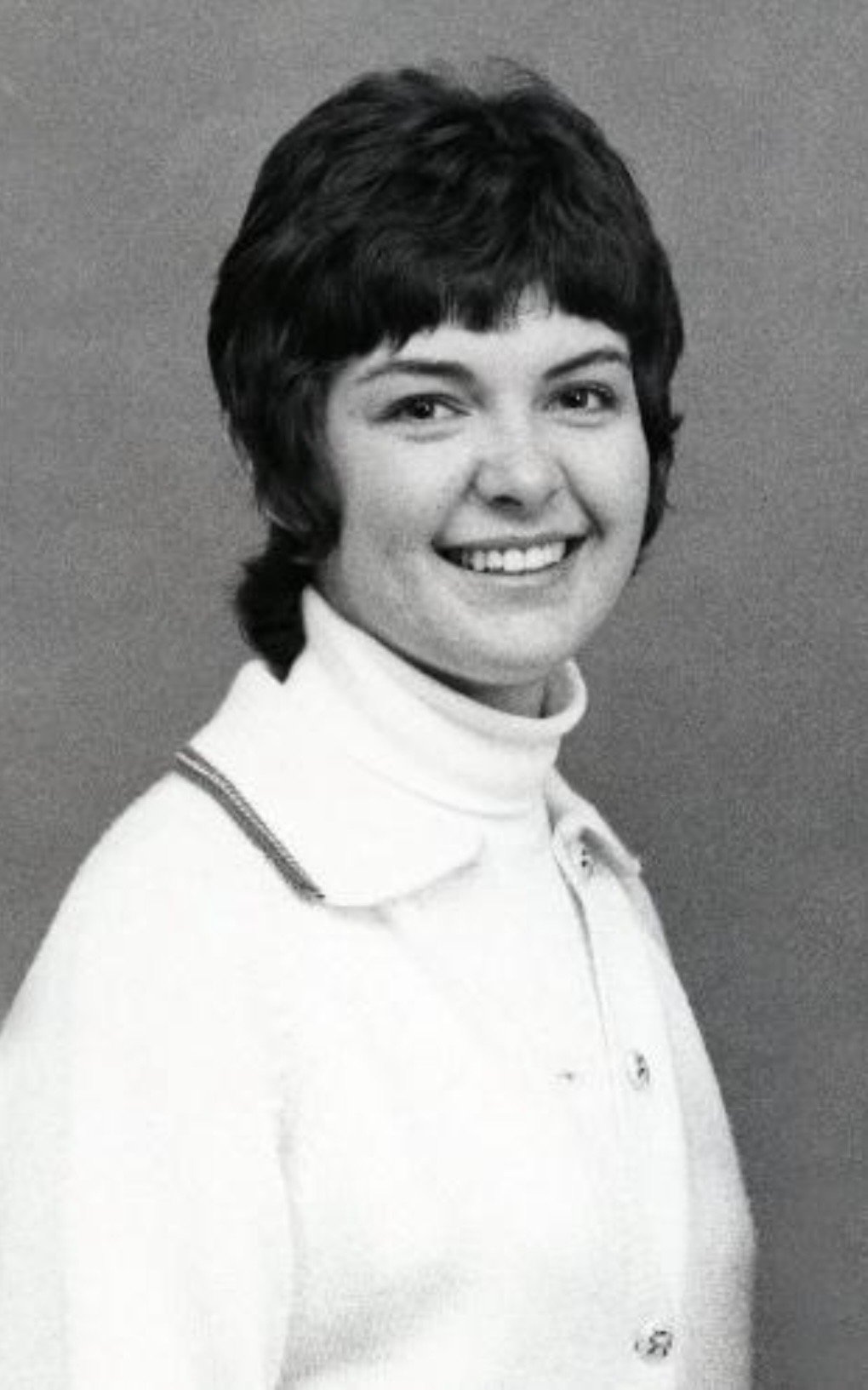
Cheryl Stirton
Athlete: Curling
Cheryl Stirton followed her sister’s path to Central Collegiate in 1965 where she skipped her team to second place in 1966 and won the provincial high school curling championship (SHSAA) in 1968.
Cheryl joined the Dorenda Schoenhals (Stirton) Ladies team as third in 1970 where the team compiled an impressive 23-3 record on their way to the Canadian Ladies Championships held in Calgary, Alberta. The team overcame their youth to defeat both Manitoba and British Columbia in the tiebreaker playoff games to win the title.
In 1973 while at school in Alberta, Cheryl played third in the Mixed Curling Playdowns with the Don Pottinger rink and lost by a measure in the last end in the Alberta Provincial final.
Cheryl joined the Rick Folk mixed team in 1974 where they won the Provincial Championship over the Gary Hogarth team in Assiniboia. The Canadian Mixed Championships were held in Winnipeg, Manitoba. The Folk foursome finished the round-robin in a tie with New Brunswick at 9-1. In the play-off, Saskatchewan scored three in the eighth end to win 9-7 and capture the Canadian Mixed title.
Cheryl was chosen the all-star third in the event.
Cheryl was a student of the game. As a curler she was in a shot making league of her own. She was dedicated to promoting curling through demonstrations at provincial clinics with coach Roy Thiessen.
For her successful curling career Cheryl was inducted into the Saskatoon Sports Hall of Fame (1988); the Sask. Sport Hall of Fame (1989, 2004); and the CURLSASK Legends of Curling (2004).
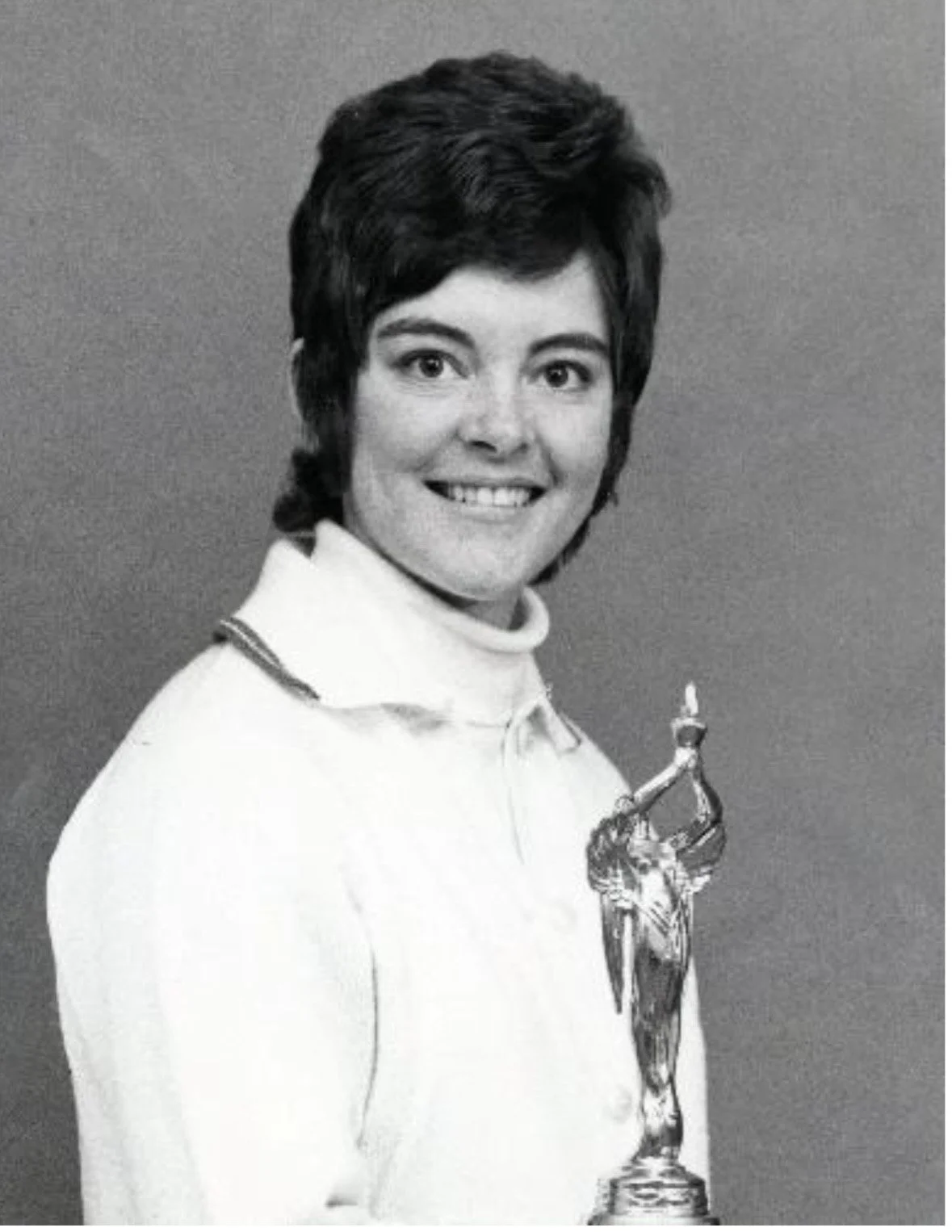
Dorenda Stirton
Athlete: Curling
Dorenda Stirton grew up in Moose Jaw where she attended Central Collegiate and learned to curl under teacher/coach Roy Thiessen. As skip, Dorenda led her team to gold in the Saskatchewan High School Association (SHSAA) provincials in 1963 and second place in 1964.
She attended the University of Saskatchewan in Saskatoon from 1965-69 and competed on the curling team.
In her first year as third and the other years as skip, the Stirton team captured five consecutive Western Canadian Intercollegiate Athletic Association (WCIAU) championships. In 1967 the team won the national Centennial University Curling Championship.
In 1970 Dorenda Schoenhals (Stirton) and her team of sister Cheryl (third), Linda Burnham (2nd) and Joan Andersen (lead) won the Saskatchewan Ladies Curling Championship and attended the Canadian
Championships (known as the Scotties) in Calgary, Alberta. The rink under the instruction of coach Thiessen was the first team to introduce warm-up sliding and pre-game exercises which drew the curious attention of both spectators and curlers at the event. This routine has become a common part of the game.
The Schoenhals (Stirton) team finished in a three-way tie for first with a 10-1 record requiring a playoff to decide the winners.
Team Saskatchewan defeated both Manitoba (8-6) and British Columbia (8-4) to claim the title. They were the youngest team to ever win the championship.
Dorenda continued to curl third for the Rick Folk mixed team capturing Saskatchewan titles in 1975, ’81,’ 82 and ‘83. Their success was evident as they finished second in both ’81 and ’82 at the Canadian Championships.
Finally in 1983 at Saint John, New Brunswick they finished the round-robin with an impressive 10-1 record, then beat British Columbia in the semi-final and faced Northern Ontario in the final. A last end double take-out assured a 6-4 victory and the Canadian Mixed Curling Championship for the Folk team.
In 2001 Dorenda was living in Alberta where she skipped her team to the Canadian Senior Ladies Championships finishing fourth.
In 2008 Dorenda played third for the Lenore Morrison rink winning the Provincial Ladies Masters Championship and again competed in the Canadian Championships in Nanaimo, BC.
Dorenda continued to be involved in the sport as an official and coach. She has collected statistics at three Scotties, two Briers, the World Juniors (2009), Vancouver Olympics and Paralympics (2010) and the 2014 Sochi Olympics.
Dorenda also coached the first Korean women’s team to play in the World Championships (2006).
The skip of that team (Gim) is still representing Korea today at the Worlds. For her long and successful curling career, Dorenda has been inducted into the following: U of Sask. Husky Hall of Fame (1987), Saskatoon Sports Hall of Fame (1988), Sask. Sport Hall of Fame (1989 & 2004), and CURLSASK Legends of Curling (2004).